If a single destination in Thailand could check every box — limestone lake, hidden waterfalls, jungle trails, and world-class islands — Suratthani would be near the top of that list. Most visitors know the province as the gateway to Koh Samui, Koh Phangan, and Koh Tao, but the mainland holds plenty of things to do in Suratthani that most people fly straight past. This guide covers 25 of the best places to visit in Suratthani across every type of trip, with a 3-day itinerary to help you make the most of it.
This is the undisputed landmark of Suratthani, and it genuinely lives up to the reputation. Touring the lake by longtail boat past the three limestone peaks rising from emerald-green water feels like stepping into a classic Chinese landscape painting. Spending a night in a floating bungalow here means waking up to thin morning mist drifting over the karst formations in complete silence — one of the better ways to decompress after months of work.
A natural pool so clear the sandy bottom gives the water a pale blue tint, set inside dense, well-preserved forest. You can wade in or paddleboard a kayak through the freshwater mangroves surrounding it. It’s a good spot for groups and families who want to spend time outdoors without a long hike. One of those places that reads better in person than in photos.
For sheer photographic drama, this one is hard to beat. The Phuttawadi archway — carved with extraordinary detail — catches the morning light in a way that makes photographers lose track of time. Above it, dozens of white chedis rise from the limestone peak, each with its own sculptural style. The temple merges faith and natural landscape in a way that feels unlike anything else in southern Thailand.
One of the most impressive waterfalls in the province, with ten distinct tiers cascading over a sheer rock face inside Tai Rom Yen National Park. The sheer size of the rock wall gives the falling water a curtain-like appearance that matches the name. Forest trails lead up to viewpoints at the top where the views are genuinely worth the climb. Serious waterfall enthusiasts should put this on the list.
A slow-living experience just outside the city. A small wooden boat takes you through a natural tunnel of nipa palms arching overhead — the canal stretches as far as you can see, shaded and quiet. Along the way, old wooden houses sit above the water, and locals tend their gardens at the river’s edge. Sunday mornings bring a small floating market here. It’s the kind of calm that’s easy to take for granted and hard to forget.
Koh Samui’s best-known waterfall, split into two sections — Na Mueang 1 and Na Mueang 2 — each with its own character. The main draw is the wide granite rock face with a broad pool at the base, cold and clean after a day at the beach. Coconut palms and dense forest ring the area. A good stop for cooling off mid-island without driving too far.
For those who prefer something quieter, Hin Lad offers a gentle jungle trail through shaded forest leading to a series of naturally sloped rock tiers. Water moves slowly downhill rather than dropping vertically, making the whole scene feel considered and calm. A small forest temple sits nearby. It suits anyone on Koh Samui who wants less beach and more silence.
One of the most historically significant waterfalls in southern Thailand — Rama V and several other Thai kings visited and carved their royal initials into the boulders here. The water runs strong year-round through dense forest and large rocks before reaching Thara Thip Bay, itself a beautiful and rarely crowded beach. Coming here pairs history with nature in a combination most waterfalls can’t offer.
Remote, rugged, and genuinely wild. This national park protects one of the most important watershed areas in the south, with mountain terrain, jungle trails, and a river rapid run that combines adventure with extraordinary scenery. The forest is dense enough to have rare plants and wildlife that most national parks in Thailand no longer support. For anyone who wants to earn their views, this is the one.

Koh Samui’s longest and most iconic stretch of sand. The water is shallow and calm enough for jet-skiing or kayaking, the beach itself is powder-white and the kind of blue you don’t need to edit in photos. By evening the shoreline fills with restaurants and bars — nothing too loud, just enough to give the beach a good atmosphere. If you’re only spending one day on Samui, Chaweng is where most of it should happen.
Better known as the site of the Full Moon Party, but Rin Beach has real appeal outside the party calendar. The curve of the bay is naturally beautiful — white sand, clear water, and small fish visible just beneath the surface. On ordinary days it’s quiet enough to read on the beach undisturbed. Come during a Full Moon Party for maximum energy, or come in the off-weeks for the beach itself.
The hike takes some effort, but from the top you get the best panoramic view on the island: Chalok Baan Kao Bay and Thian Og Bay curving toward each other with a ridge of green between them. It’s become the defining image of Koh Tao. The island itself is a world-class diving destination with healthy coral reefs and sea turtles that show up regularly at dive sites around the coast.
Three small islands connected by sandbars, viewed from the top as a Y-shaped white strip surrounded by water in three distinct shades. The postcard image is real. Beyond the viewpoint, the snorkeling around the island is exceptional — corals, reef fish, and calm water that’s easy to navigate. If you love the sea and are anywhere near Koh Tao, this is worth the short boat ride.
Forty-two limestone islands scattered across the Gulf of Thailand, protected as a national marine park. There are sea caves to kayak through, a saltwater lake on Mae Koh Island that’s a brilliant green, and a hilltop viewpoint that makes the scale of the archipelago click into place. A day trip from Koh Samui is the easiest way to do it — tours cover most of the highlights without needing to camp or plan independently.
A tiny island a short boat ride from Samui, known for the resident pigs that wander the beach and approach anyone holding food. It’s genuinely charming in a way that photos don’t quite prepare you for. The water around the island is shallow and clear. Good for a relaxed half-day trip when you want something different from the main beaches.

The spiritual anchor of Suratthani, and one of the most complete surviving examples of Srivijaya-era architecture in Thailand. The white, gold-trimmed chedi has stood here for over a thousand years. Walking the grounds, with rows of Buddha images in different postures set against the quiet that surrounds the stupa, is a strong way to start any trip through the province.
A forest monastery founded by the revered monk Buddhadasa Bhikkhu, built on the principle that a temple should be as natural as possible. There are no ornate buildings — just shade trees, walking paths, and the Spirit Theatre with its wall paintings of Dhamma riddles. The atmosphere encourages sitting with your own thoughts. For anyone drawn to Buddhism, simplicity, or just a break from the usual temple circuit, Suan Mokkh is worth the detour.
The gold Buddha on Fanun Island is visible from a long way off, and getting there — across a causeway, up the naga-flanked stairs — is part of the experience. From the top, the view across the gulf is wide and clean, especially late in the day when the light turns the gold deep orange. It’s one of Koh Samui’s essential stops.
A hilltop temple with a golden chedi that’s often overlooked in favor of the Big Buddha, but the views from here cover the Samui airport runway and a broad stretch of the Gulf of Thailand in all directions. The wind keeps it cool, the setting is calm, and the 360-degree perspective makes it one of the best vantage points on the island.
Sitting beside the Tapi River in the city center, this Srivijaya-style white structure holds the sacred city pillar that locals consider the spiritual heart of Suratthani. At night the shrine is lit up in a way that makes the architecture look its best. Visiting before leaving the city is a long-standing tradition for both residents and travelers.

The go-to street food destination in town. After dark, the market fills with stalls selling Suratthani-style Pad Thai with its sharp southern seasoning, traditional rice noodles with curry, grilled seafood, and desserts. The price of a full meal here is low enough that you can try three or four things without worrying. A lively, local, honest night market.
Every Friday evening, the old wooden fishing village at Bo Phut transforms into a walking street. Heritage shophouses now house restaurants with good food and atmosphere, coffee spots, and stalls selling handmade items that are actually worth buying. Sea breeze, live music at the occasional spot, and a general lack of pressure make it one of Samui’s more enjoyable evenings. Note: open Fridays only, closed Saturdays and Thursdays.
A small floating market open on Sundays only, surrounded by nipa palm gardens and coconut groves. The food here is local and specific — dishes you won’t find easily outside the community — and the handmade goods sold by local vendors are genuinely made by hand. A boat trip through the canal adds another dimension to the visit. Low-key, unhurried, and worth the Sunday morning.
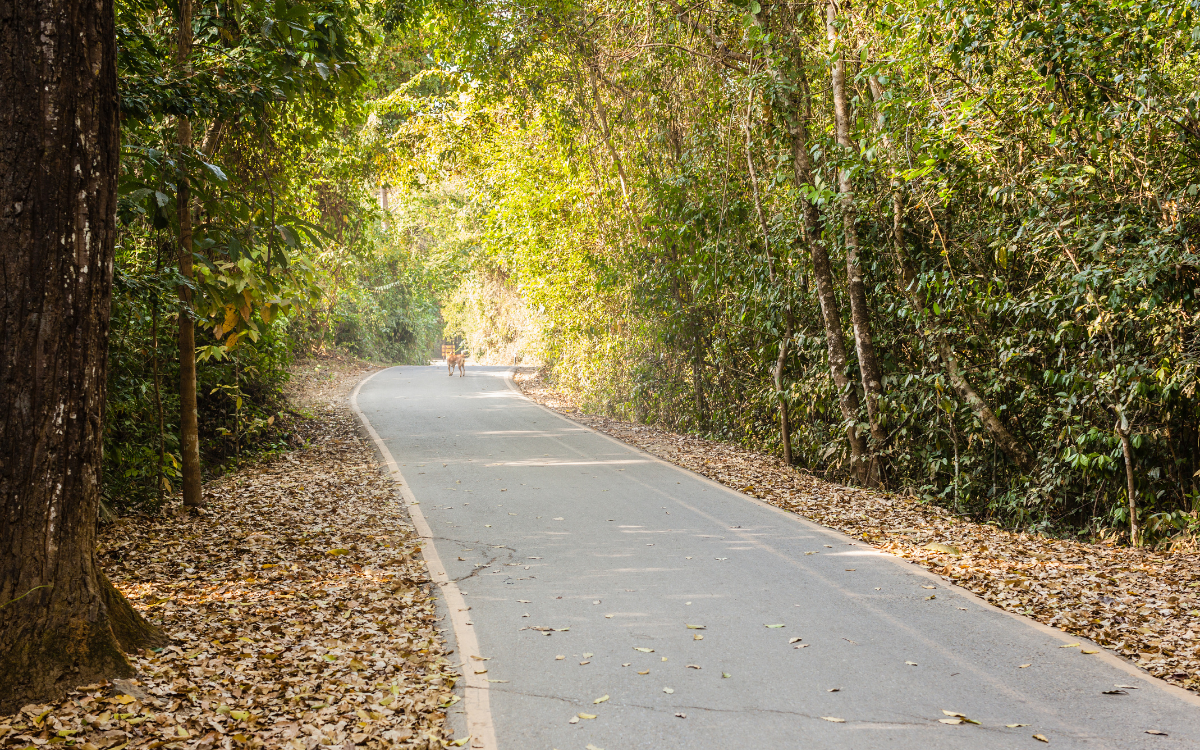
A cable suspension bridge over the Phaesaeng River near the entrance to Cheow Lan Lake, with a direct view of Thep Phitak mountain — a limestone peak that looks unmistakably heart-shaped from this angle. The surrounding area has fruit orchards and large trees. Anyone passing through on the way to the reservoir should stop here; the photograph from the bridge is one of the better ones in the province.
An unusual landscape hiding in Na San District — years of tin mining left behind accumulated sand that wind and rain have sculpted into low, strangely shaped dunes. In the late afternoon the golden light hits the sand at an angle that makes the whole place look more dramatic than it has any right to be. It’s a legitimate secret spot for photographers and anyone who wants something genuinely different from the standard southern Thailand itinerary.
Day 1 — Reservoir and Wilderness: Fly or drive into Suratthani, then head straight to Khao Phang Suspension Bridge for photos before boarding a boat at Cheow Lan Lake. Spend the afternoon exploring the karst landscape by kayak, then check into a floating bungalow on the water. End the evening watching stars with no light pollution in sight.
Day 2 — Freshwater Pools and City Life: Wake up to mist over the reservoir, then make your way to Ban Nam Rad Watershed Forest for a swim in the natural pool. Head back to Suratthani City in the afternoon — stop at the City Pillar Shrine, then finish the evening eating your way through San Jao Night Market.
Day 3 — Temple Trail and Seafood: Drive north to Chaiya to visit Wat Phra Borom That Chaiya and walk the grounds of Suan Mokkh. On the way back, stop for fresh seafood near the Tapi River mouth before heading to the airport or ferry pier for the next leg of the trip.
Getting around: Renting a car is the best option for exploring the mainland, since the province is spread across multiple districts with no reliable public transit between them. For the islands, ferries and speedboats run regularly from Don Sak and Tapi piers — book ahead, especially in high season.
Best time to visit: Suratthani is viable year-round, but the islands (Samui, Phangan, Koh Tao) are at their best from December through April when seas are calm and water clarity peaks. October and November bring the southwest monsoon — check the forecast before booking those weeks.
Don’t miss: Suratthani’s food is its own reward. Beyond the standard sightseeing, look for Rong Reun oysters, Chaiya salted eggs, Na San school rambutan in season, and the dried seafood sold fresh along the coast. Eating well here doesn’t take effort — it just takes knowing what to ask for.
Whether you’re after mountain forests, open ocean, ancient temples, or a beach to read on for a week, things to do in Suratthani cover more ground than most visitors realize. The province earns a longer stay than most people give it. If this is your first trip through southern Thailand, make sure your Suratthani chapter is long enough to go beyond the ferry terminal.


