Surat Thani has a reputation built on its islands and its reservoir, but the province keeps another card close — a collection of waterfalls scattered across the mainland and the islands that most visitors never get around to finding. Some sit deep in jungle that takes a proper walk to reach. Others are a short drive off the main road and easy for any traveler to visit. All of them offer something the beaches and the dam don’t: the sound of water over rock, cool air under a forest canopy, and the particular quiet of a place that isn’t on most tourist itineraries yet. This guide covers 12 of the best Surat Thani waterfalls across Koh Samui, Koh Phangan, and the mainland, with everything you need to plan the visit.
The most visited and most recognizable waterfall on Koh Samui, and for good reason. There are two sections — Na Mueang 1 and Na Mueang 2 — and the second is the one worth prioritizing. It drops from a much greater height, the pool at the base is wide enough to swim in, and the surrounding forest makes for excellent shade on a hot afternoon. The area around the waterfall has elephant trekking available for those who want it, and durian orchards nearby where vendors sell freshly cut fruit straight from the tree — a combination that makes a longer visit very easy to justify.
A waterfall for anyone who wants a proper walk rather than a roadside stop. Getting here requires roughly two kilometers on foot through a natural trail, shaded by dense canopy and broken up by large boulders that make good resting points along the way. The waterfall itself has a deep enough pool to cool off in, and the adjacent Hin Lad Hermitage adds an atmosphere of quiet calm that’s rare on Koh Samui. A good half-day outing that earns its reward.
Tucked into the hills above durian and coconut orchards, Khun Sri is the waterfall that locals visit when they want somewhere quiet. Small in scale, completely unhurried, and genuinely uncrowded — it’s the kind of place where you might have the pool entirely to yourself on a weekday morning. The water runs down a long, gradual cascade of rocks that makes for easy wading and a decent swim at the base. Worth seeking out specifically because most visitors to Koh Samui never do.
A hidden waterfall deep in Koh Samui’s interior forest, and one of the best-kept secrets on the island. The water is clear and cold year-round, and the light that filters through the canopy in the mid-morning catches the surface in a way that photographs beautifully. The walk in is quiet and the waterfall itself sees very few visitors — which is precisely what makes it worth the effort.
Something genuinely unlike anything else on this list. Ta Nim — widely known as Uncle Nim’s Mini Garden — is where a local craftsman has spent years carving Buddhist statues and deity figures directly into the rocks surrounding a natural waterfall, creating a forest shrine that feels like stepping into a mythological landscape. The water and the stone carvings exist together without obvious artifice, and the result is an atmosphere that’s hard to describe and worth experiencing in person.
A mid-sized waterfall that requires almost no hiking to reach, which makes it the most accessible option on this list for families traveling with young children or elderly visitors. The water spreads across a broad rock face and falls in a wide curtain rather than a concentrated stream — less dramatic than Na Mueang 2, but genuinely easy and pleasant. The surrounding trees keep the area shaded all day, and there’s enough flat ground nearby to sit and cool down after a swim.
A small, quiet waterfall that works particularly well as a picnic destination. The defining feature here is a large, smooth rock surface angled just enough for the water to flow across it in a sheet before dropping into the pool below — visitors tend to sit in the shallows and let the current run over them, which functions surprisingly well as a natural back massage. Noticeably less crowded than Na Mueang, with a slower atmosphere that suits a long afternoon in the shade.
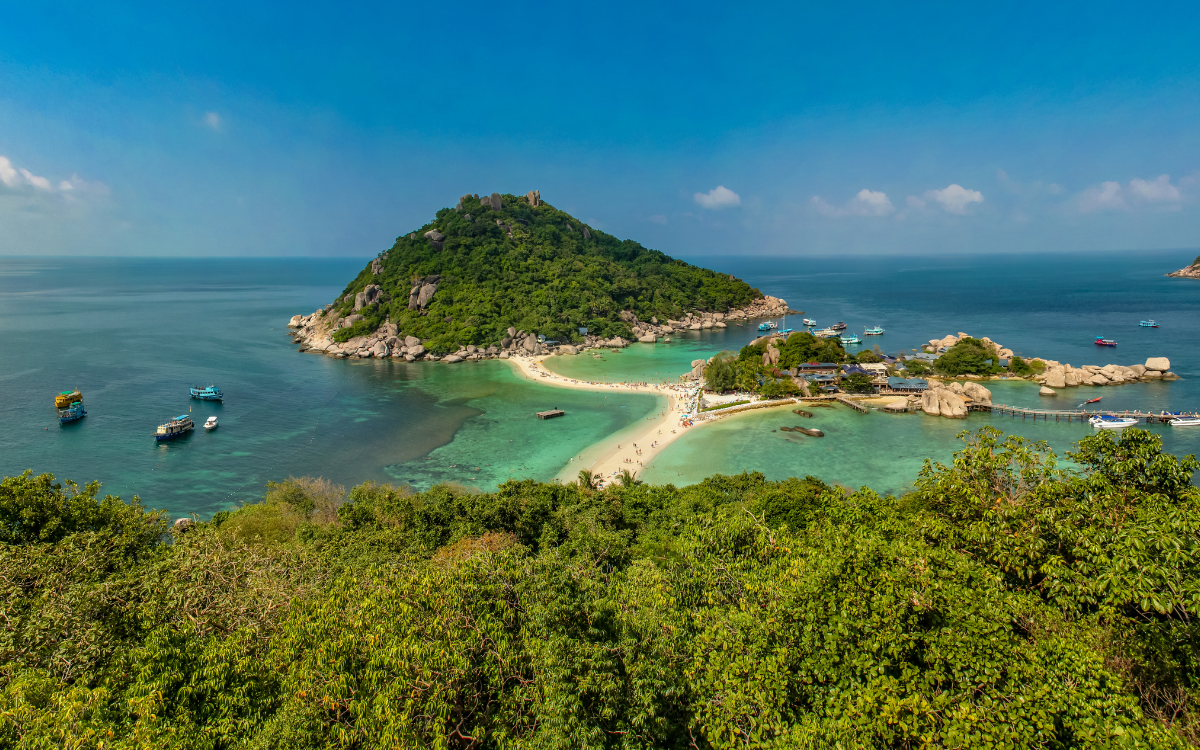
Part of Than Sadet–Koh Phangan National Park, Phaeng is the tallest waterfall on the island and the most dramatic. The best time to visit is in the weeks after heavy rain, when the volume of water is at its peak and the falls thunder down the cliff face in a way that makes you feel the force of it from a distance. For photographers, every angle here delivers — the combination of height, water volume, and surrounding jungle is difficult to miss. Allow extra time to explore the national park trails nearby.
A small waterfall with a natural pool that genuinely resembles an outdoor jacuzzi — the water drops in stages over irregularly shaped rocks before settling into a basin fringed with ferns and tropical plants in deep, vivid green. It’s quiet in a way that Phaeng Waterfall isn’t, and the surroundings feel particularly undisturbed.
The most historically significant waterfall in Surat Thani Province, and possibly in southern Thailand. King Rama V visited Tan Sadet fourteen times during his reign, and his handprint is preserved in the rock at the waterfall’s edge — a detail that makes this more than just a swim stop. The waterway runs all the way down to Tan Sadet Beach, the water is clean and cool throughout the year, and the national park setting keeps the area well maintained.
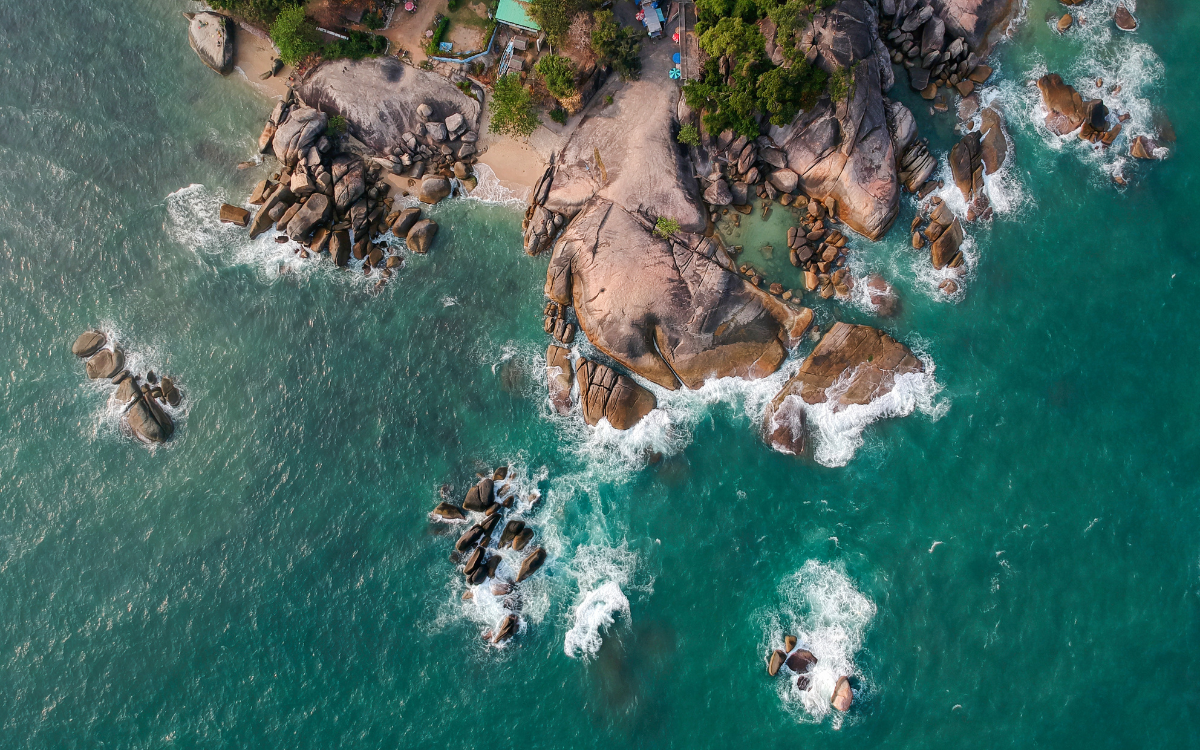
The largest and tallest waterfall in Surat Thani Province, set within Tai Rom Yen National Park, and worth the drive from the city. The waterfall runs across more than ten tiers, but the third level — where the drop approaches 80 meters — is what draws most visitors, and it earns the comparison to water falling from the sky that gave the waterfall its name. Large Phluan fish move through the clear pool at the base, visible without any effort, and the surrounding forest keeps the air cool even in the hottest months of the year. One of the most powerful natural spectacles the province has to offer.
A genuinely off-the-radar waterfall hidden in the forest of Phanom District, and the right destination for anyone who finds the more popular spots too busy. The water passes over golden-colored rocks that catch the light in the late morning and give the waterfall its name — Than Thong meaning “golden stream.” The surrounding rainforest holds plant species rarely seen outside protected areas, and the birdlife here is active enough that birders make specific trips for it. No crowds, no facilities, no noise except the forest itself.
Surat Thani’s waterfalls offer something that the beaches and the reservoir don’t — a particular kind of stillness found only in moving water and dense forest. Adding one or two to any Surat Thani itinerary opens up a side of the province that most visitors miss entirely, and the range here is wide enough to suit every kind of traveler. Easy family-friendly stops like Wang Sao Thong on Koh Samui sit alongside serious jungle destinations like Than Thong on the mainland, and almost everything on this list is either free or very inexpensive to enter.
One practical note before you go: always check the weather before visiting any waterfall, particularly during the rainy season between July and September when water levels can rise quickly after heavy rain. And leave the place exactly as you found it — these are natural sites without significant maintenance infrastructure, and their condition depends entirely on the people who visit them.



